
Psychologist, Surveyor, Journalist, Historian?: The Illegibility of Anthropology in the Field

Inquiries about an anthropologist’s purpose reveal a lot about why anthropology remains illegible to people working for the welfare of Muslims in Hyderabad, India. This blog post reflects on a common question asked by my interlocutors over different ethnographic settings: “What do anthropologists even do?”
“You should not study this topic. Your study will only cause more harm to the people. How will it help the Trust?”, Shahzada questioned me after answering a query I had made about his role in a Muslim Charitable Trust in Hyderabad, India. A man in his mid-thirties, Shahzada had joined the Trust five years ago to work as an accountant. While I was thinking about how to justify my research to Shahzada, he asked another pivotal question, “What do anthropologists even do?” Over three months, I volunteered with Shahzada multiple times in the free medical camps organised by his Trust across the impoverished neighbourhoods in Hyderabad. As my preliminary fieldwork was drawing to a close and I bid him farewell, I kept pondering the significance of his question: “What do anthropologists even do?”
Prior to fieldwork, I had prepared my research proposal, carefully thinking through the questions which I would ask in the field. On arrival in Hyderabad, I realised that fieldwork would also entail answering questions from my interlocutors: about anthropology, my research, my motives, and what necessitated my presence with them. After many interviews, meals, drives, walks, travelling and volunteering together, I could see that one common question across the different organisations with whom I volunteered was: “What do anthropologists do?” Like Shahzada, people needed to understand the work of anthropologists. The question was extremely revelatory as the illegibility of anthropology generated mistrust. The issue of trust is a well-worn topic in the discipline. But it has seldom been discussed in relation to the opacity of the discipline outside of its murky historical association with colonial and imperial forays.
Meeting me was a source of confusion and anxiety for my interlocutors. They were unsure of what I aimed to accomplish by being around them for a long period of time. My interlocutors understood how interviews work and how surveys are conducted, but participant observation and an inclination towards long-term presence were unheard of before. For a research subject like Islamic charitable organisations working for the marginalised in contemporary India, it is understandable to be wary of a man whose discipline is undecipherable. Hence, the request to study everyone associated with charitable trusts raised suspicion over my ‘real’ intentions in the field.
"The question was extremely revelatory as the illegibility of anthropology generated mistrust."
I was often asked, “what do I hope to find by studying an Islamic charity?” To make sense of my ‘purpose’ I placed myself in-between a surveyor, a journalist and an oral historian. At times, when none of these roles fit, I found it was possible to explain my project by expressing interest in the institution of Waqf. Waqfs are Islamic charitable endowments which are regulated by statutory bodies governed by the state in India. In 2025, the Indian government passed the Waqf Amendment Bill, which reduced the autonomy of Muslim trustees over religious endowments while increasing the control of the state over the statutory boards regulating Waqfs. But this led to the questions: “Shouldn’t you be studying Waqfnameh (endowment deeds) and spend more time in the archives? What will you find by talking to the people?” These questions reflected further befuddlement. I was back to explaining “what do anthropologists do?”
"To make sense of my ‘purpose’ I placed myself in-between a surveyor, a journalist and an oral historian."
At a fundraiser organised by a Trust for elderly care, I individually went up to every single attendee present and introduced myself.
“Young man, who are you and why is someone your age interested in talking to us oldies?”
“Hi, I am Arman. I am an anthropologist studying charity and philanthropy.”
“What is anthropology?”
“Anthropology is the study of human culture and society, therefore, I am interested in the culture of charitable giving in the city.”
“So you’re like a psychologist studying the human mind and why it needs to do charity?”
Disheartened, I thought to myself maybe it is not the best idea to introduce myself as an anthropologist. I wondered: how do I mitigate the mistrust towards an anthropologist if I cannot even introduce the discipline in the first place? Luckily, towards the end of the preliminary fieldwork, an opportunity to teach anthropology opened up in a charitable trust which uses Islamic alms to provide a year-long fellowship to students who are preparing for the highly competitive civil service examinations, in order to get a position in the Indian bureaucracy. Minorities in India are extremely underrepresented in the state institutions. As a measure of redressal, religious alms are being utilised to reduce this gap. For the 2026 civil service examination, around seven students in the batch of sixty which the Trust is funding had opted for anthropology as an optional examination subject. They needed someone to help the aspirants revise a few key anthropological theories. I elatedly offered to volunteer.
"I wondered: how do I mitigate the mistrust towards an anthropologist if I cannot even introduce the discipline in the first place?"
During our second class, exhausted after our discussion on structuralism in anthropology, one of the students preparing for the civil services asked me: “Does anthropology even have a scope?” Before I could jokingly say, “there is a sign of it”, punning on Saussure’s work on the ‘sign’, another student replied, “there is none.” The disappointment of those well versed with anthropology was akin to the problem that Shahzada had posed to me at the beginning: how will my research help his Trust? These last three months of fieldwork in Hyderabad forced me to reflect on the connection between the illegibility of anthropology, the question of trust, and the value of the discipline for the very people it studies.
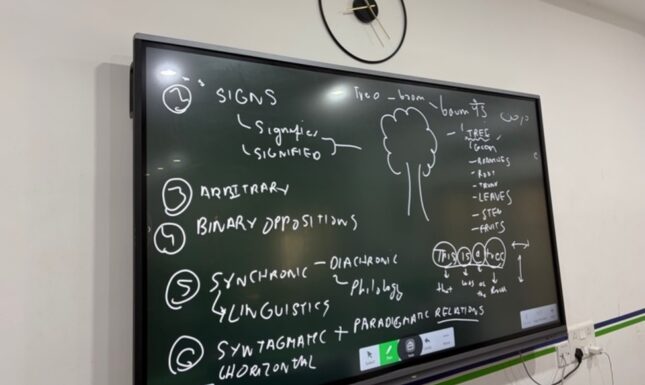
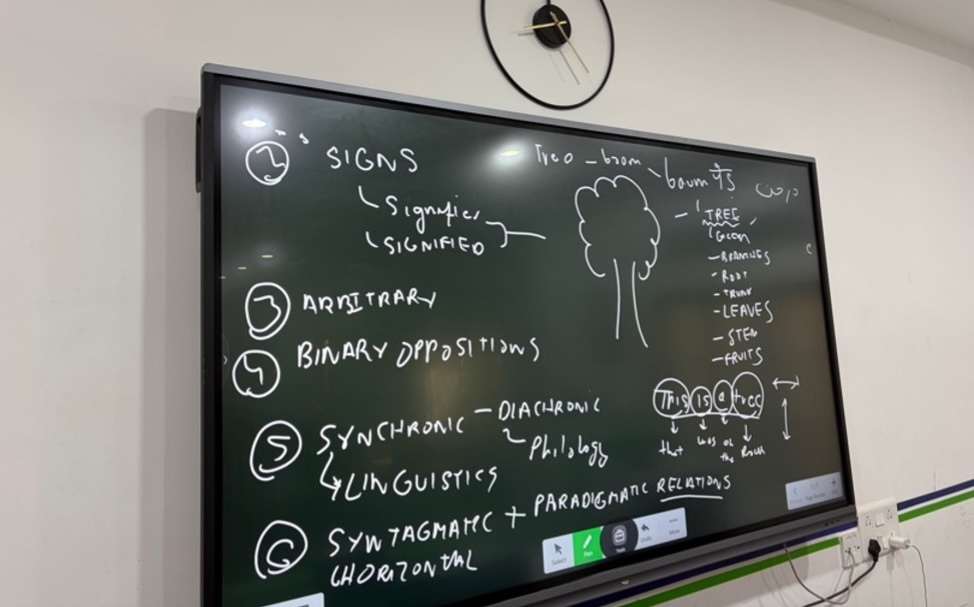
I have learnt that I have to be patient and content with being understood through other, more legible roles whose benefits are valued by my interlocutors as they observe what anthropologists do and analyse if anthropology will help them over the next phase of fieldwork in Hyderabad.
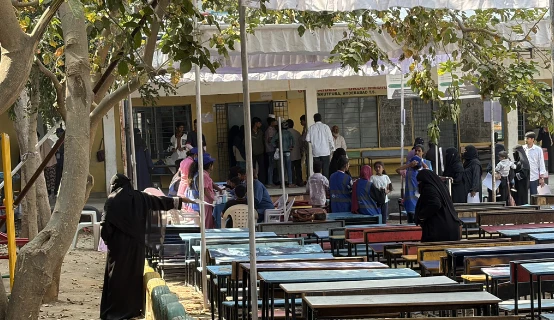
Banner image: A medical camp organised by a Muslim Charitable Trust in a minority school. 2026, Hyderabad, India. Photo by Author.
Funded by the European Union (ERC, Entangled Universals, 101124597). Views and opinions expressed are however those of the author only and do not necessarily reflect those of the European Union or the European Research Council. Neither the European Union nor the granting authority can be held responsible for them.




0 Comments
Add a comment