
Why do the Dutch never get tired of everyday sandwiches, the boterham?

At lunchtime on university campus one thing stands out: the boterham (sandwich). Coming from Japan’s elaborate bento culture, I was puzzled that so many students eat the same thin sandwich every day. I kept wondering, "Don’t they ever get tired of it?". This blog is a brief participant observation of that daily ritual.
Beginning of the boterham journey
I worked in Japan for about 10 years, but I never made my own lunch box. Although Japan has a profound bento culture, packing many small items in a box, I must confess I never did that. Seeing Instagram images and having an inflated image of what bento should look like, I lacked confidence and resorted to buying lunch outside.
A 7-Eleven rice ball costs about one euro, and restaurants offer a variety of decent hot meals under six euros. Why would I bother to prepare a shameful lunchbox? But that changed when I arrived in the Netherlands in 2024 as a pre-master's student. Eating out here is expensive, and even buying a simple sandwich at Albert Heijn to go costs four euros. Suddenly, making lunch became essential.

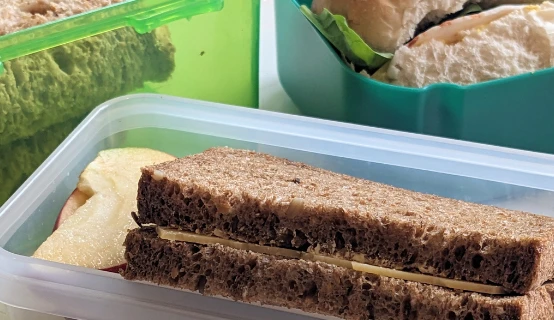
Probably for the same reason, many people bring their lunch to work and school. When I walk around the campus at lunchtime, I encounter countless slices of bread. A bronze-haired, neatly dressed female student takes out a big box that looks like a tissue box, along with an apple, and bites into a thin brown boterham. A male student with cool headphones sitting in a corner of the canteen takes out a crumpled bag of supermarket bread and pulls out a boterham from it – it seems he reuses that plastic bag as a lunch box.
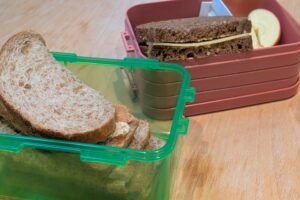
Styles vary, but the basics are the same – boterham. It's not just a sandwich, but a very humble one consisting of thin slices of brown bread and a simple filling. According to my observation, more than 90% of students use store-bought, pre-sliced soft bread. Sourdough bread is invisible. A single slice of cheese seems to be a dominant filling, which matches an online survey result that cheese is the most popular filling by 71% (multiple responses allowed, meat company Stegemen’s poll 2016).
In my first days in the country, I didn’t have a proper lunchbox and felt ashamed to bring my boterham in a zipped plastic bag, but I soon learnt it was normal and nothing to feel ashamed of. This made me feel at ease and started to like this culture.
“Lunch is fuel”
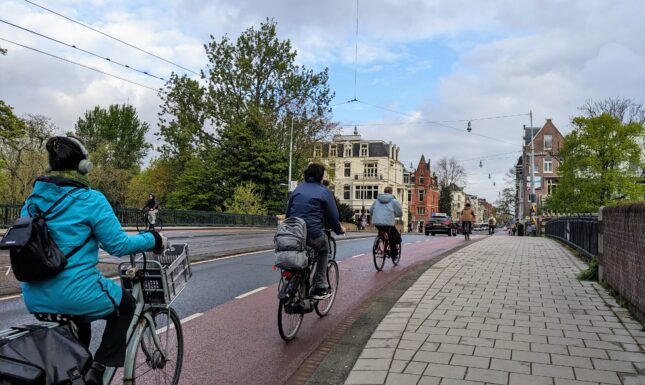
“But how could you have the exact same food every day and not get bored?”, I asked my Dutch pre-master classmates, who are around thirty years old, about their relationship with the boterham. One said, “Lunch is fuel! It’s not about taste or getting tired of it. I eat it because I need energy. I sometimes eat it while cycling”. I found this extreme, but apparently she is not exceptional, as I often see people eating a boterham or apples while cycling – very efficient and skillful. Another said, “a boterham is easy and good enough. Once I tried to switch to yogurt because it seemed healthy, but that didn’t fill me up.” I relate to that; my body craves carbohydrates. So boterham sounds like a great option.
However, although they seem content with the boterham, they don’t praise it either. As time progressed, I started to enjoy it, and the cheese here is incomparably more delicious than in Japan. But if I say “boterham is so delicious”, I’m sure they will look at me twice and ask for justification. Boterham is not like that.
Boterham demands no love or effort, and keeps the day going. I feel there is absolute trust in a boterham, not necessarily because it is excellent, but because it is simple and unpretentious.
Value and trust in simplicity
Does having the same food every day mean my Dutch friends do not care about food? That’s the stereotypical image of Dutch people, but the boterham experience uncovered a different aspect. The standard lunch break is thirty minutes in many companies and universities in the Netherlands. That means people have time to do something else. The Netherlands is known for its early end to the workday.
Through my interview with home chefs (as part of my course study), I got to learn that families place great importance on gathering around the dinner table – perhaps much more than Japanese people who work until late in the office. Although it is too naive to conclude that the boterham allows people to go home early, I still believe the "lunch as fuel” mindset promotes daytime efficiency and puts more emphasis on having dinner together – not necessarily as an extensive meal but as shared time. It’s not that they don't care about food. They really cherish the time spent around the dining table. This experience made me realize that I might have been seeing food too narrowly – focusing on its materiality, such as taste and variety.
Now, boterham is a part of my life. It takes just five minutes to prepare, there is no need to think about the menu, and it is just good enough. This made my life so easy. Through a year of participant observation and embodied practice, I found myself slowly building up the trust to boterham.
Jolijn and Ruth, thank you for sharing your boterham stories. Interviews with home chefs were conducted with Joanne, Ruth, and Yajuan.






0 Comments
Add a comment