

After Method: Sensing Darjeeling through Friction


In this second part of the blog series, Abhimanyu and Anna revisit the multimodal outcomes of their experimental workshop, Sensing Darjeeling, proposing that each sensory experience found its own mode of expression, and that attending to these differences reshapes our methods of inquiry.
अनुभुतिको दुई दिन जङ्गल र डाँडा-काँडा को बीचमा आयौँ हामी टोय ट्रेनको आवाज गुन्जिरहेथ्यो डाँडामा टाशि देलेक, थुजे छे भन्दै भ्रमण गर्दा -गर्दै सल्ला र हल्ला गर्दै |
(Two days of experiences) Between the forests and the hills, we The sound of the toy train Saying “Tashi Delek” and “Thuje Tse,” Walking slowly, Amid laughter, noise and fun, Talking, laughing, and exchanging ideas, In Darjeeling's cold weather, |
(Poem and translation by Tshewang Yolmo, originally presented in Nepali)
The participants in the workshop came from strikingly different worlds and backgrounds. To accommodate this diversity, we chose to keep the outcomes open-ended, allowing them to be guided by the group’s conversations, collective discussions and the sensory records participants gathered. Some wanted to document traditional practices and heritage infrastructures. Others were more interested in highlighting the ecological fragility of the hills and the slow encroachment of development on a landscape they felt had been under strain.
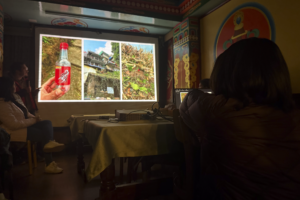
What happens when you arrive to document a place and someone there is already documenting you?
During the Sensing Darjeeling workshop, a tea garden worker—who also runs a pickle business and is a social media influencer—pulled out her phone and began interviewing the workshop participants for her channel. She had her own questions, her own audience, her own frame, and was not producing data for our workshop. Maybe she was producing knowledge alongside us, on her own terms. Or maybe, she was simply going about her day, and we happened to cross her path.
The encounter with the tea garden worker coheres something we had been spiralling around even before the workshop began. One of the methodological objectives of the Futuring Heritage Project was to explore new ways of making sense of place and ask how we can rethink spatiality beyond GIS maps and authorised discourses. During the workshop, however, the question quickly turned back on us: who, or what, gets to make sense of a place? And in what language? A first step towards rethinking knowledge production, we found, was to let go, or at least attempt to let go, of the academic grammar to which we are so accustomed.
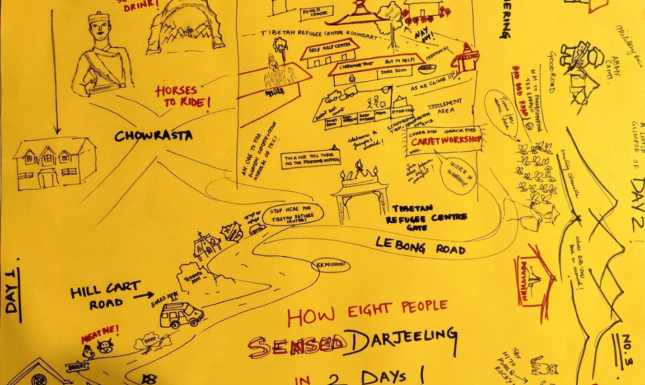
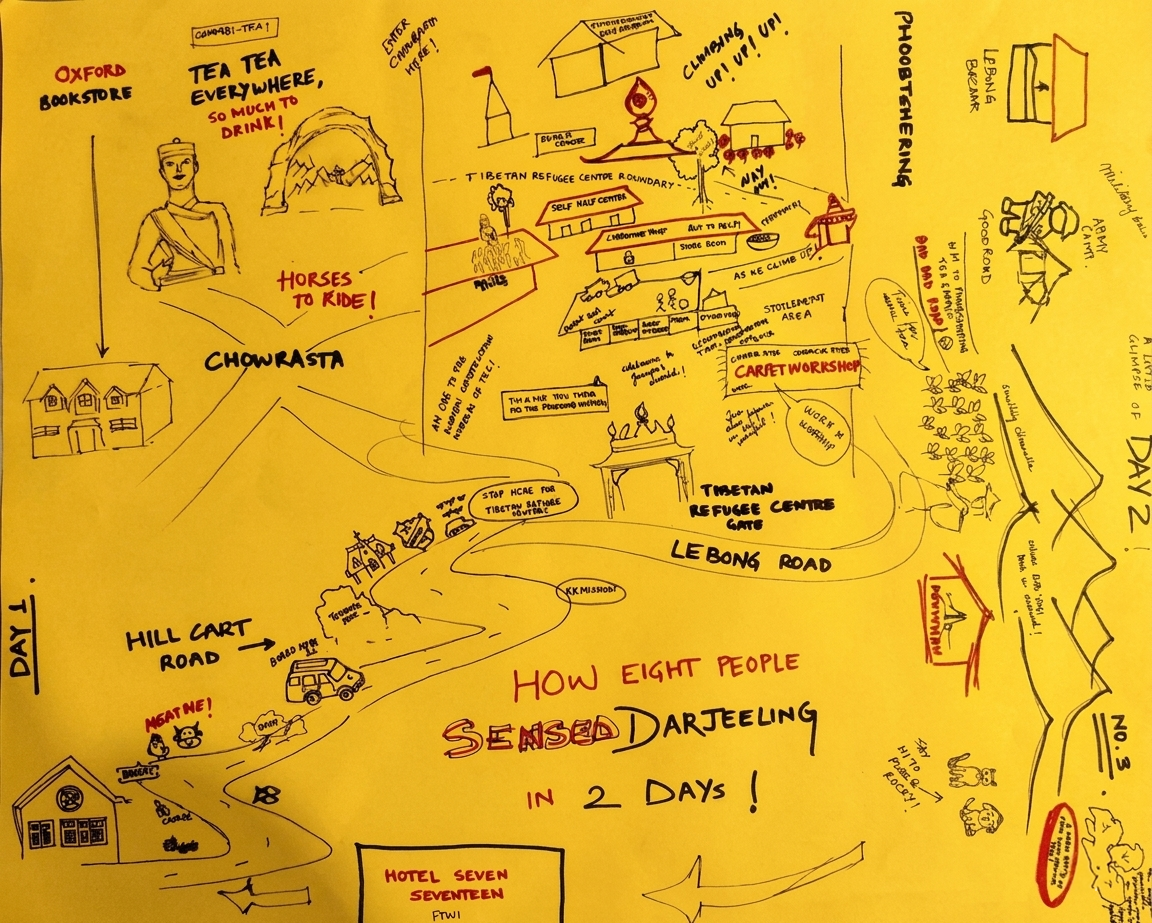
Open and incomplete mapping
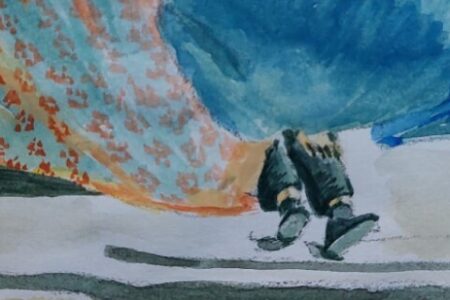
What emerged by the end of two days was not a cohesive or unified dataset, but contested, plural ways of knowing. Conservationists highlighted the region’s ecological fragility and argued that what is worth preserving is not only the colonial architecture or the UNESCO-recognised toy train, but also the living landscapes within which they sit. Students wrote poetry and produced graphical maps. One participant did something more sensorial: he imitated the sounds of a toy train. Making the sound rather than just recording it made a point that this was not merely an acoustic experience but a sensorial one through which we engaged with place.
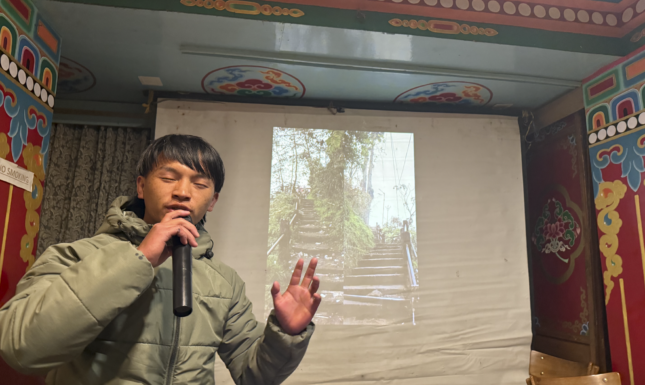
One group that explored the Darjeeling railway station posed a simple question: Why should we call it a “toy” train? While often framed as a marker of tourism and colonial legacy, it is also a feat of engineering that once carried tea plantation workers across the steep hills of Darjeeling. Its sound, at once familiar and haunting, became a shared reference point. For a moment, differing opinions converged through a lingering sensory experience.
Just as our Sensing Darjeeling workshop came to an end, so too does fieldwork. After months of immersion, what was once foreign gradually becomes ordinary, and then, we leave. Yet we do not leave unchanged. Attuned to our senses, not through the gaze of trained academics but as embedded outsiders, we begin to see a different kind of site. One that exceeds what is immediately visible, extending beneath and beyond physical infrastructure.
Is ethnography not, at its core, a practice of speculating, wondering and sensing our way through the relationships that constitute a place?
Sitting with the contradiction
We began the workshop uncertain whether to call it a citizen science initiative or a living lab. We remain just as uncertain now. But perhaps that is precisely the point.
Our post-workshop reflection has been twofold, and neither sits comfortably.
The first is methodological. We have come to believe that any exercise in collaborative sensing—or whatever we choose to call it—must first confront the contradictions it carries. We critiqued academic grammar while still seeking structure. We advocated decentralisation of knowledge while arriving from institutions. We celebrated the tea garden workers’ camera while our own cameras were already running. These are not problems we solved, but tensions we lived with. Living within them, rather than attempting to overcome them, feels closer to what this work actually is. Seen this way, chaos and friction were not obstacles to the workshop. They were the workshop itself.
The second reflection is less expected. The workshop itself became an output, not in the form of a report but as a proposal. Several participants have since suggested conducting similar workshops in the Himalayan towns of Kalimpong, Gangtok and Dehradun. This feels significant because this points to something that methods alone cannot explain. Long before this workshop existed, questions of who gets to product knowledge, in what language and on whose terms had already been circulating across the Himalayas. These are no single answers to these questions. What Sensing Darjeeling may have done, in small and imperfect ways, is create a space where such questions could be asked again, without the pressure to resolve them. That space, perhaps, is what the workshop ultimately produced.
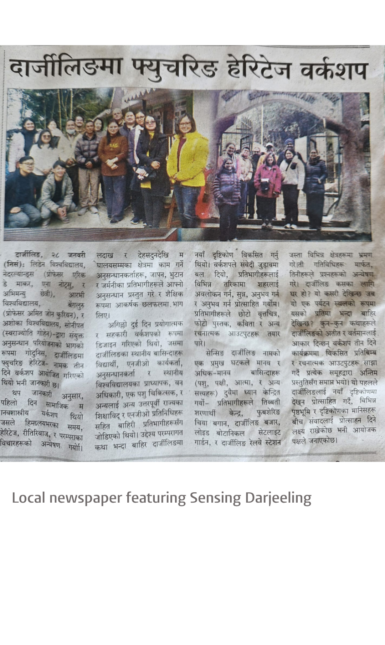
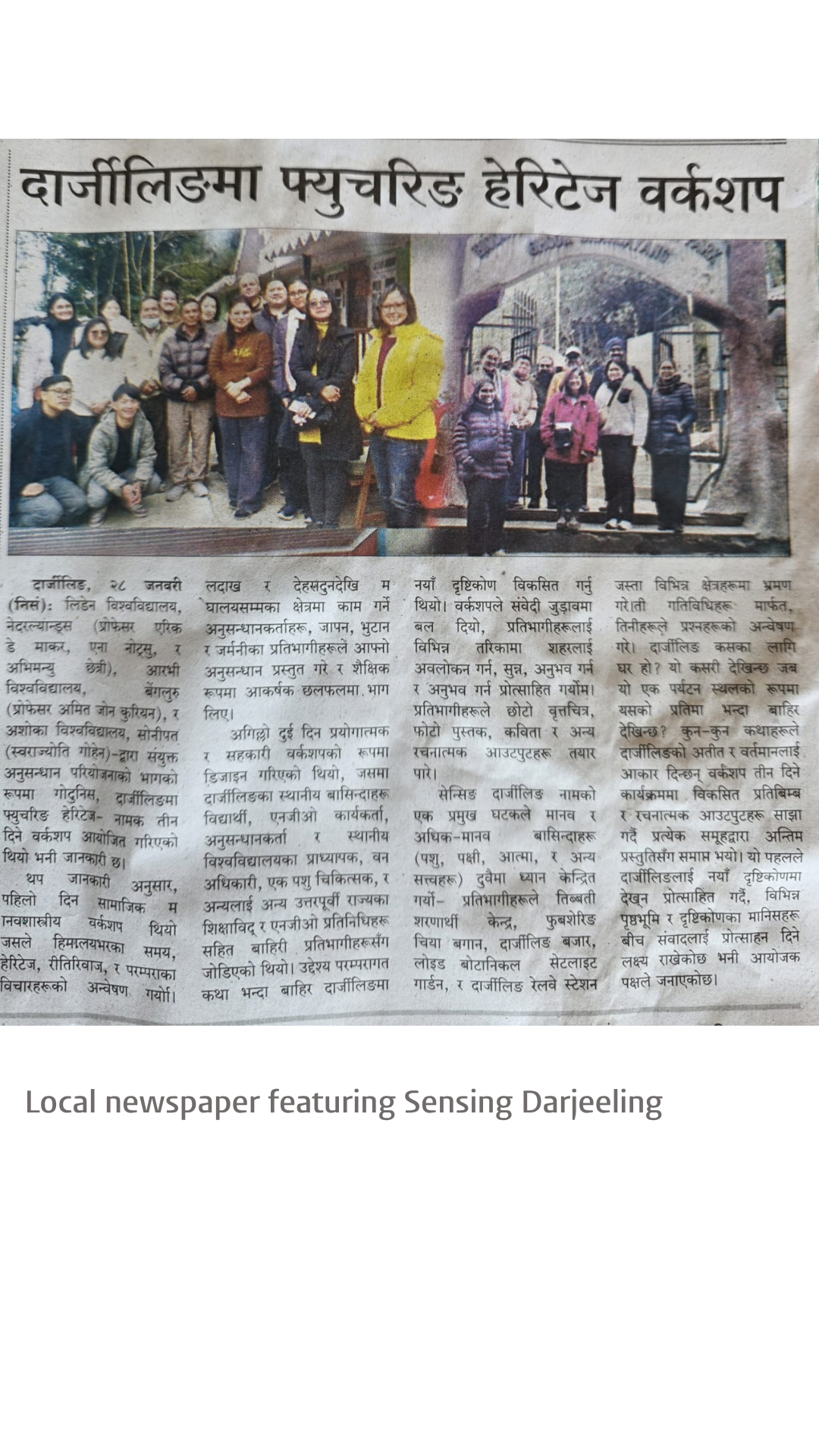
A productive tension emerged almost immediately and persisted through to the final presentations. As facilitators, we often felt the urge to guide things back towards a shared method. However, after much introspection, we resisted – because doing so would have meant slipping back into the very grammar we were trying to loosen. Alas, the friction, it turned out, was where the thinking happened.
Months later, reflecting from our respective field sites, we find that leaving behind our academics selves has become a crucial way of engaging with spatial experience.

0 Comments
Add a comment